AI Tool
How to Generate Studio-Grade Product Mockups in 60 Seconds Using Text Prompts
admin
October 28, 2026 · 3 min read
- ai-product-mockup-generator
- commercial-ai-photography-prompts
- ai-product-photography-for-ecommerce
Commercial product photography has long been one of the heaviest operational expenses for indie brands, e-commerce stores, and digital agencies. Booking a physical studio, hiring a photographer, arranging strobe lights, and spending days retouching reflections routinely costs anywhere between $500 and $1,500 per session. For direct-to-consumer (DTC) brands, Amazon sellers, and dropshippers testing multiple concepts every week, that turnaround time and budget simply do not scale.
Generative visual tools have changed this dynamic. With Hugogen's AI Designer, you do not need 3D rendering skills or expensive physical sets. By formulating well-structured text prompts, you can generate photorealistic, studio-quality commercial mockups in under 60 seconds.
Below is the complete blueprint: the technical prompt architecture, five field-tested copy-paste templates, and an actionable workflow to turn static renders into high-converting video ads.
Why Generic Prompts Fail
Most creators struggle with AI image generators because they input basic, generic descriptions such as:
"A bottle of organic facial cream on a wooden desk."
Because the prompt lacks environmental guidance, the AI model has to guess critical variables, resulting in muddy lighting, flat textures, and a distinctly plastic or cartoonish look.
To achieve authentic commercial photography, where glass refracts light naturally, liquids hold clarity, and shadows anchor the product to the surface, you need to direct the AI like a lighting technician in a photo studio.
The 4-Part Commercial Prompt Formula
Every photorealistic product visual can be engineered using four modular components:
[Subject & Material Finish] + [Environment & Supporting Elements] + [Lighting Architecture] + [Camera Angle & Color Profile]
1. Subject & Material Finish
Be specific about the container type, texture, transparency, and packaging material:
- Instead of: "a perfume bottle"
- Use: "a heavy-bottomed square crystal glass perfume bottle with a brushed gold magnetic cap and an off-white textured linen label"
2. Environment & Supporting Elements
Surround the subject with contextual props that elevate the perceived value without overwhelming the composition:
- Examples: "resting on a beige textured travertine block," "surrounded by fine white sand and wet sea pebbles," "perched on a dark, wet slate surface with scattered coffee beans."
3. Lighting Architecture
Lighting dictates depth, mood, and edge definition:
- Diffused Studio Light: Ideal for crisp, reflection-free catalog images and packaging displays.
- Directional Sunlight: Produces long, sharp shadows and warm contrast for editorial lifestyle shots.
- Backlighting / Rim Lighting: Accentuates liquid transparency, glassware contours, and beverage condensation.
4. Camera Angle & Color Profile
Specify the focal length, depth of field, and post-production tone:
- Examples: "85mm commercial lens, f/2.0 aperture, shallow depth of field, warm neutral color grading, tack-sharp product focus."
5 Ready Copy & Paste Prompts for Commercial Mockups
Use these copy-paste prompt templates directly in the AI Designer input bar to produce production-grade mockups instantly:
1. Clean Beauty & Skincare (Warm Travertine Aesthetic)
Prompt:
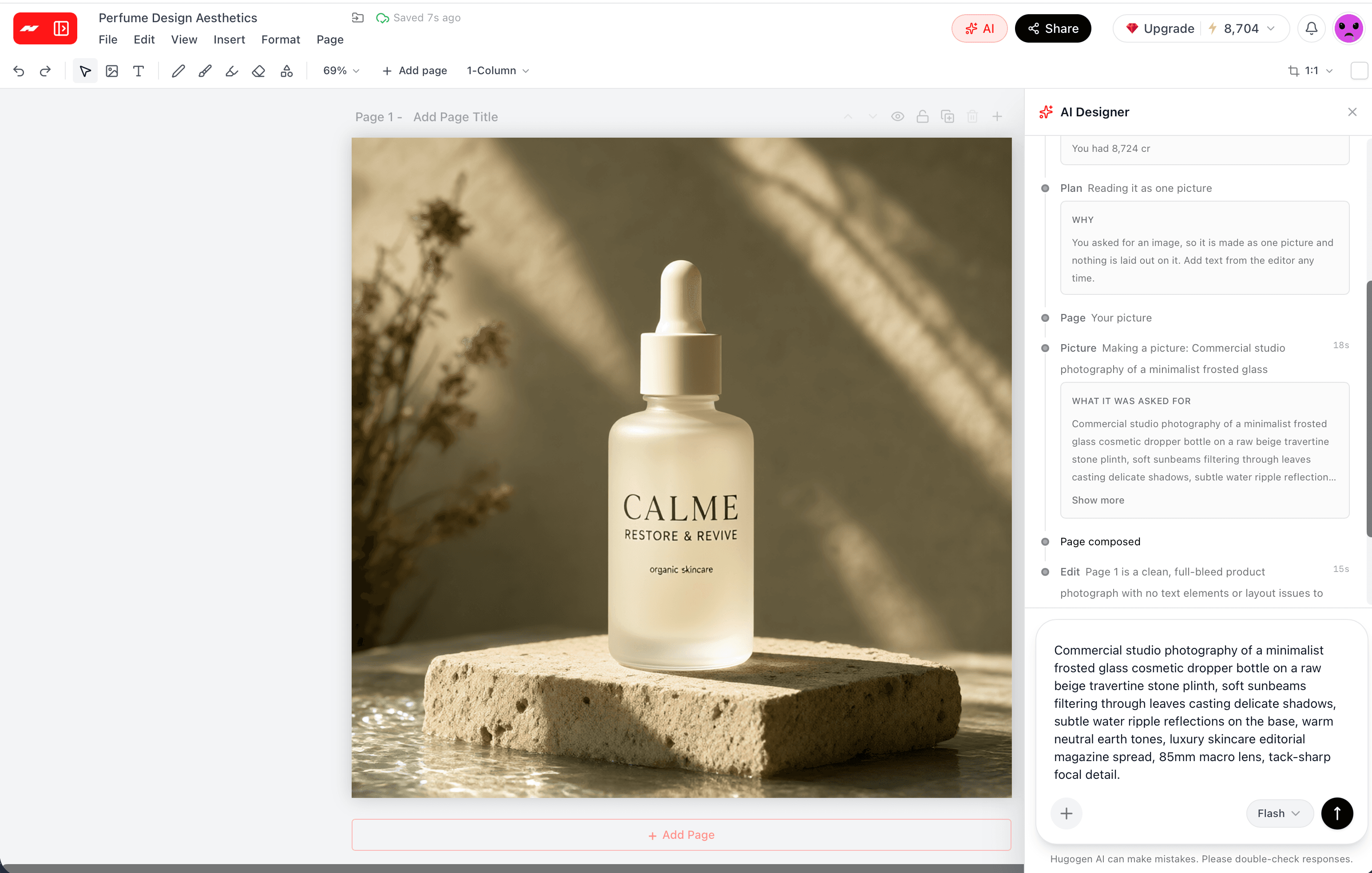
Commercial studio photography of a minimalist frosted glass cosmetic dropper bottle on a raw beige travertine stone plinth, soft sunbeams filtering through leaves casting delicate shadows, subtle water ripple reflections on the base, warm neutral earth tones, luxury skincare editorial magazine spread, 85mm macro lens, tack-sharp focal detail.
- Best for: Serums, facial cleansers, luxury cosmetics, organic skincare.
2. Ready-to-Drink Beverage (Crisp & Refreshing)
Prompt:
Hero commercial shot of a clear glass beverage bottle coated in crisp condensation droplets, filled with iced matcha latte, floating ice cubes, resting on a sunlit oak counter, bright morning rim lighting illuminating the green liquid, shallow depth of field, high-end commercial beverage advertisement.
- Best for: Cold brews, functional sodas, wellness drinks, cafe menus.
3. Consumer Tech & Accessories (Dark Minimalist Architecture)
Prompt:
High-end commercial tech product shot of matte black over-ear wireless headphones resting on a polished dark concrete slab, subtle cyan ambient neon edge glow, brushed titanium accent hinges, dramatic directional spotlight, clean minimalist workspace aesthetic, sharp macro focus, 8k resolution.
- Best for: Smart accessories, hardware products, audio equipment, gaming peripherals.
4. Artisanal & Eco-Packaged Goods (Kraft Paper & Studio Clean)
Prompt:
Studio product photograph of a brown kraft paper stand-up pouch with a minimalist black typography label, set on a warm terracotta tile, scattered roasted specialty coffee beans and a sprig of dried eucalyptus, soft diffused overhead studio light, authentic sustainable catalog aesthetic.
- Best for: Specialty coffee, organic pantry items, eco-friendly goods, artisanal snacks.
5. Fine Jewelry & Luxury Goods (Deep Velvet & High Specularity)
Prompt:
Macro commercial shot of a handcrafted 18k solid gold signet ring set against folded forest-green velvet fabric, narrow directional pin spotlight creating brilliant specular metallic reflections, moody cinematic atmosphere, 100mm macro lens, razor-sharp focus on craftsmanship.
- Best for: Jewelry, timepieces, luxury leather accessories, premium gifts.
Best Practices for High-Converting Visuals
- Pick the Optimal Aspect Ratio Before Generating:
- 1:1 (Square): Perfect for Shopify/Amazon product thumbnails and Instagram feed posts.
- 9:16 (Vertical): Optimized for TikTok, Instagram Reels, and mobile story placements.
- 16:9 (Horizontal): Ideal for desktop website hero sections and promotional banners.
- Leave Negative Space for Branding:
If you intend to add headlines, discount badges, or logos, add instructions like"generous negative space on the left side"or"minimalist empty background around the subject". - Preserve Lighting Consistency Across Collections:
When building a multi-product catalog, keep the lighting description (e.g.,"soft daylight from camera left, off-white seamless backdrop") identical across prompts to ensure visual cohesion.
On-Demand Creation: No Recurring Subscription Traps
Most design and generative AI platforms force creators into rigid $30/month subscriptions. For brands that only need commercial mockups during product launches, these monthly retainers create unnecessary overhead.
Hugogen provides flexible, on-demand credits top up starting from only $8.
Unsure yet? Start your Hugogen journey for free by signing up for your free account by clicking 👉 Here
Try it on your own footage
The Free plan needs no credit card. Bring a long video and see what comes back.